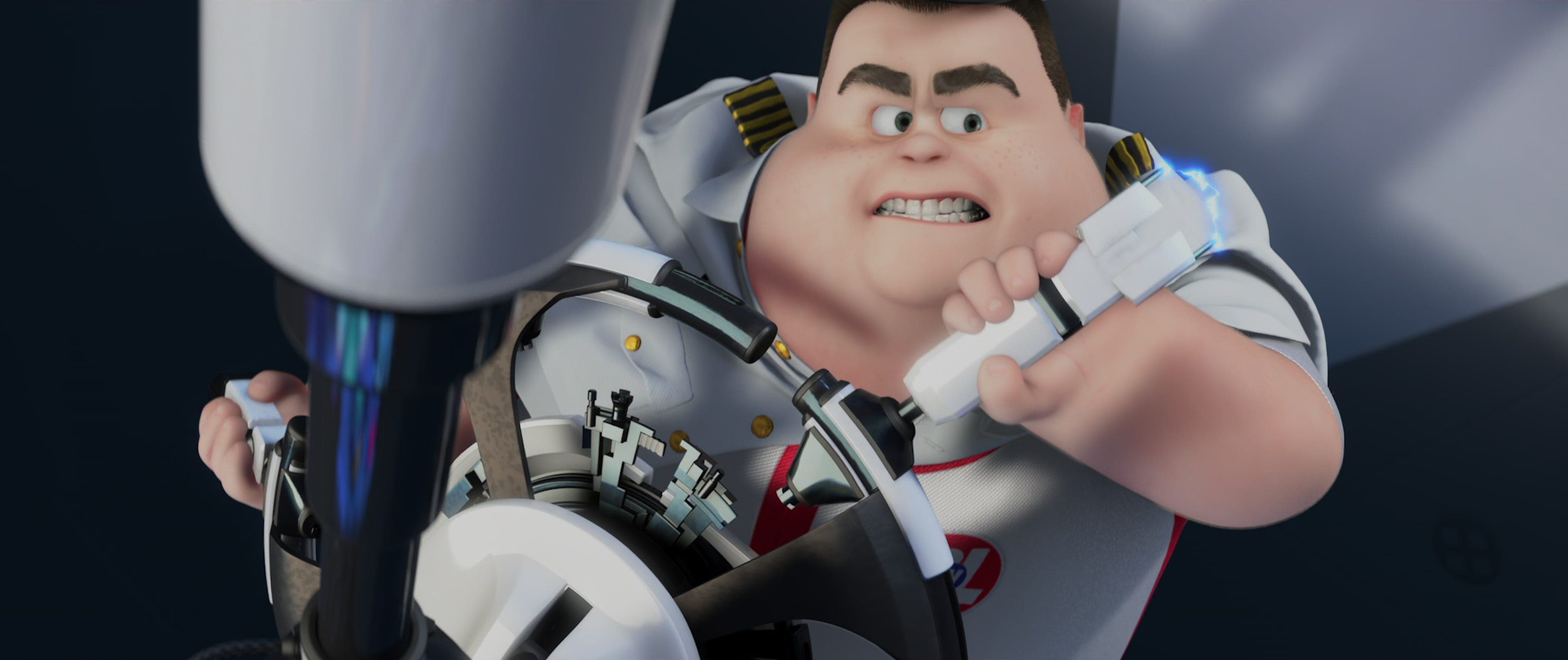

In the Pixar masterpiece Wall-E, the Axiom is a marvel of engineering. It is a self-sustaining, hyper-efficient ecosystem where every human need is met by an algorithm. But at the center of the ship sits AUTO — the AI pilot’s wheel. AUTO is the ultimate Company Brain. It has all the data, it manages all the systems, and it follows its directive with mathematical precision.
The problem? AUTO was operating on a directive — A113 — that was centuries out of date. It had the data (the green plant) proving Earth was habitable, but it lacked the context to care. It took a human captain, finally standing on his own two feet, to look at the same data and realize it was time to go home.
As "Company Brains" become the new gold rush — fueled by Y Combinator’s latest call for startups — we are at a crossroads. We are building the Axiom. But if we aren’t careful, we’re going to end up with a ship full of data and no one actually captaining the vessel.
The Trap of Context Debt
We’ve talked about this before: Context Debt is the silent killer of scaling companies.
When you implement an AI Company Brain, you’re essentially centralizing your organization’s memory. But memory without a pulse is just an archive. If your AI is only consuming Linear tickets, Git commits, and polished Notion pages, it’s not learning how you think — it’s just cataloging your "meta-data."
Linear tickets tell the AI what was done. Git commits tell it how it was built. But neither tells the AI why you decided to kill a feature three days before launch because it "felt wrong."
AI follows the directive. Leaders follow the mission.
If your leadership team is stuck in back-to-back meetings while the Company Brain automates the output, you aren’t leading; you’re just watching the autopilot fly you deeper into space.
Leading at 12x Speed
If your team can now do a year’s worth of work in a single month thanks to AI augmentation, the traditional C-Suite model is officially broken. You cannot "manage" that much velocity from a dashboard.
To lead now, you have to:
- Use the Product: You can’t judge the "soul" of a release from a slide deck.
- Internalize the Output: If the ship is moving faster, the Captain needs to be more sensitive to the vibrations in the hull.
- Close the Context Gap: You need to talk — frequently and loudly — about the evolving mission.
The Company Brain needs to know not just what the company did today, but how the company felt about it.
The "Captain’s Log" is No Longer Optional
The greatest context you can give an AI isn’t your documentation; it’s your journaling. But here’s the reality: modern documentation is a Frankenstein’s monster of meta-data. You think over a thought 30 times, write it down, edit it, let an AI "improve" the tone, and then hit publish. Half of it is yours; half of it is AI copy-pasta. It’s too polished. It’s too sterile.
The answer is video.
Technically, voice is just as fast, but video offers a level of fidelity that the AI of 2026 (and beyond) will crave to understand the nuance of leadership.
- The hesitation in your voice when you talk about a pivot.
- The excitement in your eyes when a prototype actually works.
- The raw, unedited "thinking out loud" that happens before a thought is "Notion-ready."
You need a channel where you talk about the why. You need to record the Captain’s Log — not for the archives, but to feed the Brain the connective tissue it needs to move from "memory" to "intelligence."
And you don’t do it alone. The Captain has officers. The CEO, CFO, CTO, COO — every leader carrying part of the mission — should be recording short, unedited reflections that get fed into the same shared layer. That practice has a name: C-Suite Journaling. Solo journaling preserves a single mind; C-suite journaling captures the connective tissue between functions, which is exactly the part the AI cannot reconstruct from tickets alone.
The Brain Needs a Soul
A Company Brain without a captain is just a very expensive way to stay lost.
Leaders must adjust every day. They keep a connective thread alive where it matters, and they have the guts to snap that thread when the world changes. They elevate new priorities based on intuition, not just "data points."
The Brain has to be more than memory. It has to be an extension of the Captain’s will.
If you haven’t "thought out loud" for your AI, it will eventually default to its own version of Directive A113. It will keep the ship moving in a straight line, even if you’re heading straight for a star.
This is the same lesson we drew out of The Martian: Watney’s logs aren’t cute astronaut content. They are the connective tissue between his constraint, his decision, and his next move. Without that thread, the data on the screen means nothing.
And it is the same warning from Blade Runner 2049: when language becomes cheap to manufacture, your archive becomes cheap to doubt. A Company Brain fed entirely on AI-polished docs will eventually be a synthetic memory of a company that never quite existed.
It’s time to stop being passengers on our own ships. Use the tools, build the brain, but for heaven’s sake — stay on the bridge.
If you’re a CEO, CFO, CTO, or COO trying to keep your team’s velocity from outrunning your context, this is what Historic was built for. Speak the why — once a day, once a week, whenever the wheel turns — and let the Company Brain inherit the part of leadership that documentation has never been able to carry.